For over 200 years, the world has built its electric energy systems based on Oersted’s original foundation from 1820 and the principles of Michael Faraday and Sir Isaac Newton. Every generator, every motor, every transformer—refined, optimised, but fundamentally unchanged.
Thane Heins says that the era of energy innovation stagnation is now over.
The founder of Thane Heins Energy Inc. isn’t talking about marginal gains or incremental efficiency. He’s making a far bigger claim: that the entire energy systems, as we now know them, are obsolete—and that Heins’ new model outperforms them entirely.
At the centre of this claim is a technology he calls the ReGenX Coil—a redesign of the core component used in virtually every electrical machine on the planet.
A Break From Two Centuries of Engineering and Energy Physics
Most of today’s energy infrastructure operates below 100% efficiency. That’s not a flaw—it’s a fundamental limitation which operates within the current limited understanding of physics and how energy systems have always worked.
Heins argues his 2007 discovery bypasses that limitation altogether and that infinite efficiency is now the new normal for electricity generation, electric motors, transformers and electric mobility.
His university validated and rigorously tested approach is based on harnessing created electromagnetic field energy in a new and novel way that, he claims, allows systems to deliver output without the same level of input traditionally required. Once fully applied worldwide at scale, the implications will be impossible to ignore: lower energy costs, reduced emissions, and a fundamental shift in how energy is produced and consumed.
From Lab Theory to Industrial Ambition
The energy sector is full of ideas that never make it past the lab. Heins has proven this isn’t one of them.
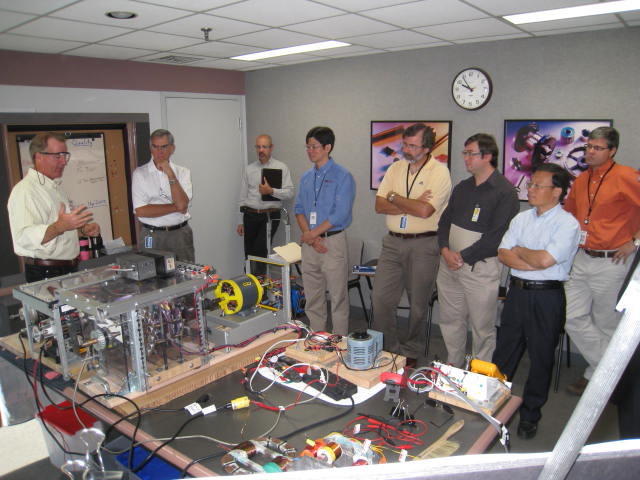
Over the past two decades, his work has been developed in collaboration with universities and international industry players, including research conducted, validated and third-party replicated at the University of Ottawa and engagement with global engineering firms, many of whom are co-inventors of Heins’ U.S. patented innovations.
Now, the focus is shifting from testing and validation to deployment.
The company is preparing for manufacturing scale-up, targeting applications across:
- Electric power generation
- Electric power consumption
- Industrial systems
- Electric mobility and ICE mobility
The timeline is aggressive. The ambition is bigger. The mission is critical.
The Resistance Problem
If the claims are as disruptive as they sound, why isn’t the technology everywhere already?
Because energy isn’t just a technical system—it’s an economic, financial and political one.
Global infrastructure, trillions of dollars in assets, and entire industries are built on existing models. Replacing them isn’t just a question of performance—it’s a question of inertia.
“The bigger the change, the stronger the resistance,” Heins says.
Necessity, however, is the “mother of invention” and global energy necessity and national energy security have never been at greater risk than it is at this very moment.
That’s why Thane Heins Energy Inc. is currently licensing its entire patent portfolio to every OEM in the world for free in joint-venture partnerships. Net-zero energy advancements at net-zero cost.
Why It Matters Now
The timing is not accidental.
Energy demand is rising. Costs are under pressure. Net-zero targets are tightening. And existing systems are being pushed beyond their limits.
In markets like the UAE—where energy strategy, infrastructure, and innovation intersect—technologies that promise step-change efficiency are more than theoretical. They are strategic and even prophetic because the energy choices made today determine what happens tomorrow and for years to come.
If a system can deliver more output with fewer or even zero inputs, the implications ripple across:
- Reduced energy costs
- National energy security
- Industrial competitiveness and innovation leadership
- Long-term environmental stewardship and carbon reduction strategies
A Claim That Challenges Everything
Heins’ work ultimately comes down to a single, controversial idea:
What if energy is not as constrained as we think—and what if it can actually be created at the point of use?
It’s the kind of claim that invites scepticism—and demands proof.
Because if it holds, even partially, it doesn’t just improve the system.
It completely rewrites it from the ground up.
Oersted got the ball rolling in 1820, and Heins picked it up in 2007 and has been running with it ever since.
But Heins is no longer alone in his race against an environmental meltdown—he has successfully handed it off already to others. Heins’ work has been shared, replicated and validated internationally more than 24 times to date by independent engineers and energy researchers in Italy, France, Holland and Canada, with replications currently under way be physicists in Beijing, China.
What Comes Next
The next phase is critical.
Scaling, manufacturing, and real-world deployment will determine whether this is a breakthrough—or another ambitious idea that couldn’t cross the gap.
For now, the industry is no longer just watching and waiting; it is getting ready to act.
Because every so often, a claim emerges that forces a simple question that demands an answer:
What if the system we’ve employed for decades is no longer the optimal one, and is now the time for a new approach?
“Because nothing else in the world…not all the armies…is more powerful than an idea whose time has come.” –Victor Hugo, The Future of Man

Passionate about journalism and media, I am committed to producing content that is not only informative and engaging but also drives social change. I advocate for women’s empowerment and gender equality, mentoring aspiring female journalists and media professionals. My approach is rooted in creativity, collaboration, and a relentless pursuit of excellence, ensuring that every project I undertake achieves its maximum potential.